Contact with the West helped King Kamehameha I become the first ruler of a unified Hawaii in 1795. Unsurprisingly, over time the initial brief contact led to an influx of traders, settlers, and missionaries, which in turn led to disease and cultural repression. (Probably the only good thing that came from Europeans in those early days was the introduction of melodic singing. If you’ve ever heard a Polynesian music session, you’ll agree that the sound is nothing less than angelic). In the 1800s, hula was decreed “immoral” and forbidden from being performed in public. It wasn’t until 1894, with the ascent of King David Kalakaua, that the ban was lifted and hula was danced freely again. The annual hula competition, the Merrie Monarch Festival, is named for him–the Merry Monarch who gave Hawaiian culture a much-needed boost. In my earlier post, I referred to hula kahiko, which is used to describe traditional hula performed prior to 1894. Today’s post addresses hula ‘auana, dances composed after this period.
‘Auana dances include singing and often drumming, similar to hula kahiko, but additionally have accompaniment from instruments such as ukulele, guitar, and even piano. While kahiko hulas are often about ali’i and gods, ‘auana hulas can be about pretty much anything. Love songs are common, but off the top of my head I can think of songs about a train, playing sports, a “crazy” kind of hula, peeking through a keyhole, and a water sprinkler. Dress requirements for ‘auana dances are also more relaxed than with kahiko (although it is still frowned on to wear artificial flowers). The modern misconception of grass skirts and coconut bras is probably leftover from the 1920s and 1930s, when tourism to Hawaii picked up and groups started performing touristy hula in skirts made of cellophane grass. This costume is still occasionally seen, but pa’u skirts and long holoku dresses are more common.
Since the topics of ‘auana songs tend to be less serious than kahiko, it’s also more common for the dancers to smile. Don’t be fooled by the smile. Dancing well is exhausting, and a slow, graceful dance is frequently more agonizing for a performer than a faster hula. My Kumu Kaui once assigned an extremely slow hula immediately after an extremely fast one; I made a comment along the lines of “oh, what a relief, we’ll get a break,” and she responded, “Actually, slow hula is harder.” She was right. The amount of control needed to force the body to match the tempo of a slow song is excruciating, and when asked about how we could possibly keep smiling when we were going to die, right now, Auntie told us that when she had been a performer she’d rubbed Vaseline on her teeth; the taste is so bad that it forces the dancers to smile whether they want to or not. We also asked whether a dancer’s legs ever stopped hurting, maybe after practicing for years like she has, and her answer was: “Haha! No!”, complete with a huge smile. Regardless of how easy a dance might look, the performers are pushing their bodies to the limit. To get a feel for this, put your shoulders back, hold your back straight as a rod, and bend your knees as far as you can go down without your heel popping up. Now walk in circles like this for 4+ minutes, and to liven it up, every now and then sink down into a full squat before popping back to the half-squat required to dance hula. Feel the burn.
Both hula kahiko and hula ‘auana can use implements, tools that complement the dance. I do not own any implements other than ‘ili’ili (and I only have these because I have a pretty extensive rock collection), so I am linking to implements on sale at alohahulasupply.com.
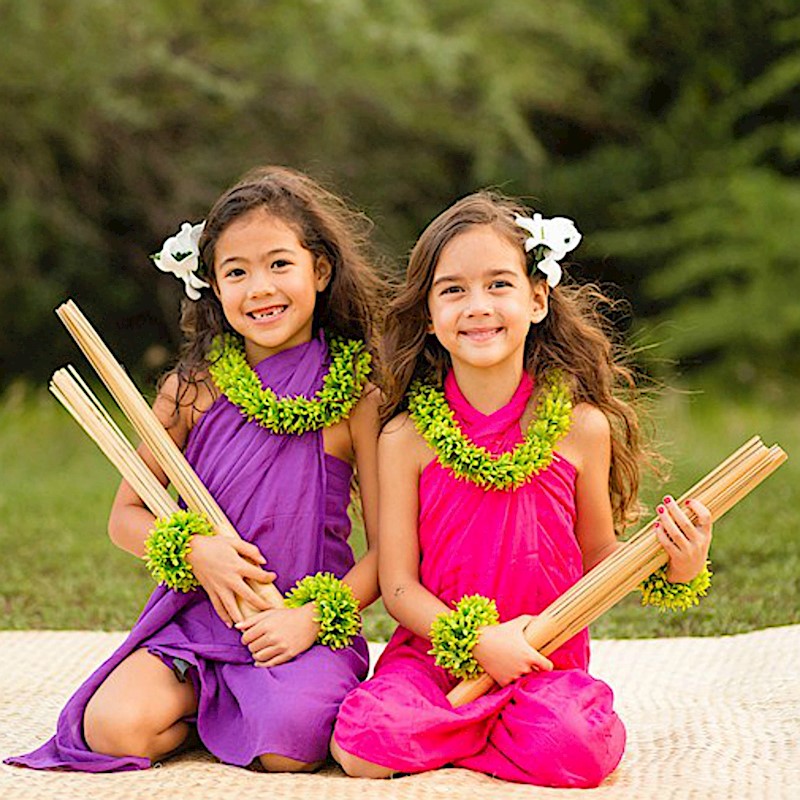
PU’ILI: split bamboo sticks, rhythmically struck together while dancing. Purchase from https://www.alohahulasupply.com/Store/Details/puili-13212.
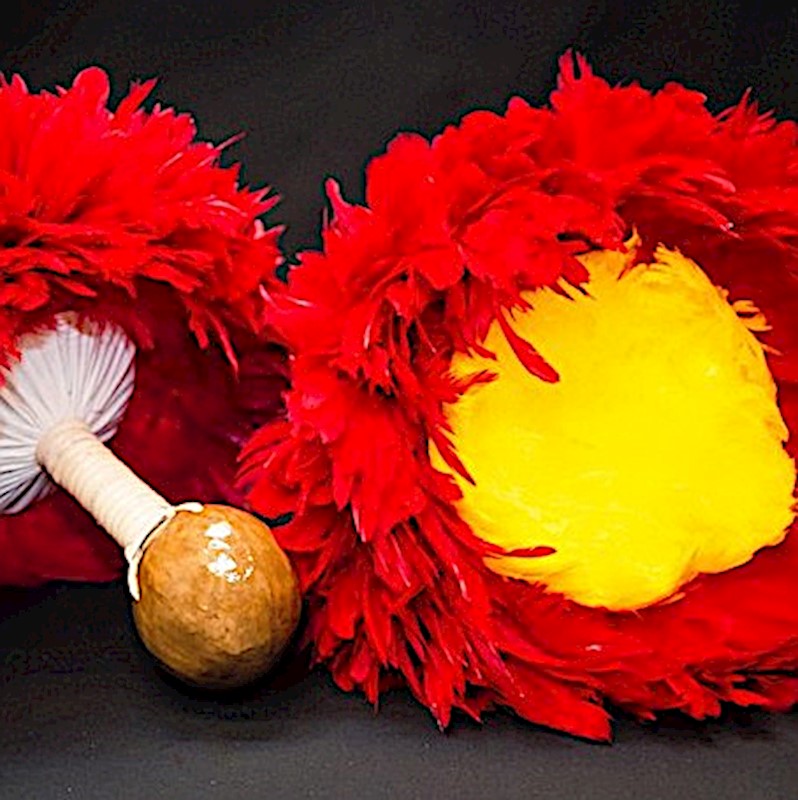
ULI’ULI: A small, hollowed gourd filled with dry seeds to make a rattle. The ‘uli’uli are decorated with a feathered top. Purchase from: https://www.alohahulasupply.com/Store/Details/uliuli-13205.
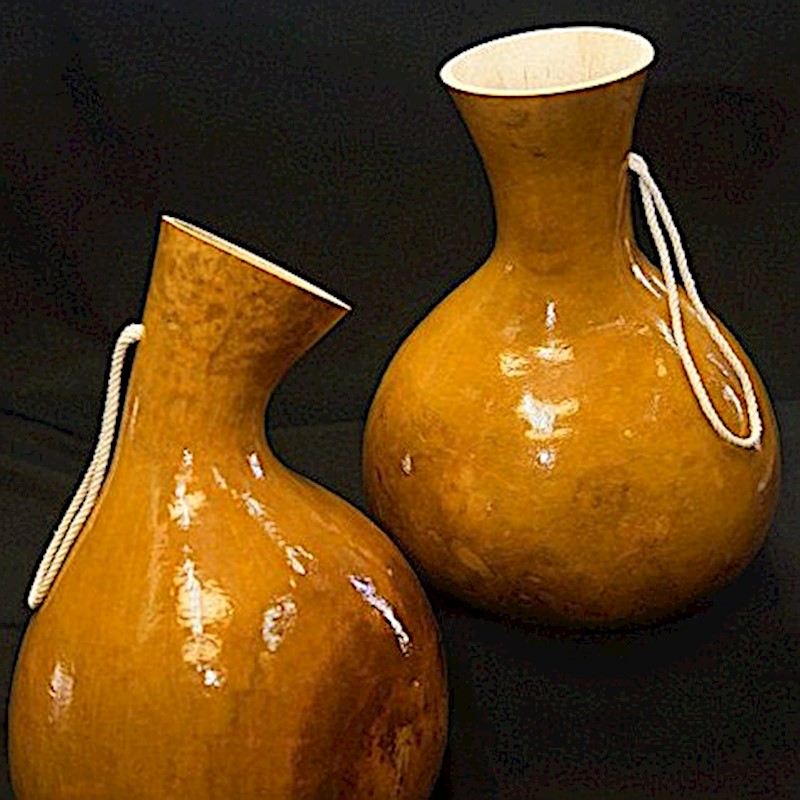
IPU: A hollow gourd used as a drum while dancing. Purchase from: https://www.alohahulasupply.com/Store/Details/ipu-gourd-13209.
KALA’AU: Tapered sticks struck together while dancing. Purchase from: https://www.alohahulasupply.com/Store/Details/kalaau-13211.

‘ILI’ILI: Four river stones held, two in each hand, and clicked together like castanets. Purchase from: https://www.alohahulasupply.com/Store/Details/iliili-13214.

Of course, reading is not always the same as seeing, so enjoy some ‘auana performances from the champion Halau O Kamuela, of O’ahu!
 wanderingsheepdog