Everywhere/Nowhere: Stuck At Home

Well, this has been a strange week, and it seems a bit pointless and a little rude to write about places to check out on your next vacation when vacations are temporarily a thing of the past. One of my sisters was meant to be in England now, visiting friends she made on an international internship. She didn’t wait until the quarantine was official to cancel; she called the airlines weeks ago knowing that this was going to blow up, but she’s still disappointed even though they are letting her postpone using the ticket until the end of the year. So this blog post is going to be a random smorgasbord of virtual “travel” options, some genuine, some silly, but hopefully all things that will help pass time.

A Long Time Ago, In A Galaxy Far, Far Away: Disney+ has all the Star Wars films, as well as the Clone Wars series (heard it’s good but the episodes have a recommended viewing order, so maybe look that up), the Mandalorian series, and the Rebels series (excellent. Watch it). The Old Republic multiplayer game has a free-to-play option that really isn’t terrible; paying a subscription ($15/month) gives you some nice perks like chat options that are good to have if you’re playing with friends, but if you want to solo, you don’t need these. The game is incredibly immersive and gives you a lot of options about which storyline to follow, both light and dark side, for your preferred version of a good time. Download from http://www.swtor.com/. Alternately, the classic Star Wars: Knights of the Old Republic can be downloaded from Steam for a reasonable cost and, occasionally, for free (I got it free, so watch for promos). This is the quintessential Star Wars game and has a really fun storyline with some good twists and a great cast of supporting characters. It isn’t quite as immersive as SWTOR, since it’s older and doesn’t have multiplayer functions, but it’s got so much Star Wars lore it’s worth at least one play-through.

Everywhere and Everywhen: The British Museum! Although the physical museum shut down, their website offers virtual tours of several galleries, a searchable timeline of some key objects, child-friendly curriculum material, and a podcast series. Their webpage about the museum’s closure (https://www.britishmuseum.org/closure) provides links to all available digital content (scroll to the bottom of the page to the final paragraphs explaining online options). The Museum also has a wonderful YouTube channel providing in-depth commentary about curators’ favorite artifacts. They also employ the incomparable curator Irving Finkel, who I’ve unofficially adopted as my crazy great-uncle and who I am pretty sure is actually a wizard. Behold:

Optionally, if you’re hoping for more suspenseful everywhere/everywhen, put on Dr. Who.

Japan: Peter Barakan’s Begin Japanology and Japanology Plus documentary series provide in-depth looks at common aspects of Japanese life, and it gets diverse. Topics include such things as kimono, shrines, soy sauce, stationary, dolls, bullet trains, bento boxes, moss, school uniforms…the list goes on and on. I haven’t been able to find an official YouTube channel for either series but a general search is likely to lead you to an episode about a topic that interests you. The other bonus is that viewing these series inevitably leads to YouTube’s algorithm recommending other interesting, Japan-themed content, such as David Bull’s channel dedicated to woodblock prints (https://www.youtube.com/user/seseragistudio). Bull is Canadian, and as far as I know, the only Westerner to become a woodblock print artist. His studio is based in Japan and the YouTube channel offers detailed looks at some favorite items from his personal print collection as well as the processes involved in creating both the carved blocks and the prints.

Woodblock prints are beyond most people’s skill to make, but those interested in trying a new hobby can check out Shibasaki-san’s watercolor channel at https://www.youtube.com/channel/UCPiQ_mEXdEbB-3Yhiq7gq5w. English-language captions are available for all videos with spoken content, and Shibasaki-san created multiple longer videos explaining basics such as blending, palette organization, and using light-and-dark values to create depth. Not going to lie, he is also very soft-spoken (think Japanese Bob Ross), and I do sometimes use his videos to help me fall asleep! This only works when my cell phone is turned over, though, because when I can read the captions and watch the artwork coming together I get too interested in what’s happening to drift off.

India: Oh, boy, where to start? The Indian diaspora means hundreds upon hundreds of websites and YouTube channels dedicated to Desi culture, and I’ve only barely started scratching the surface. But here are some educational options:

  • Guru Pali Chandra’s Kathak dance tutorials at https://www.youtube.com/channel/UCT0EeR8SMCItnnOgmLfEjoQ. (Those interested in cultural dance can also search YouTube for content about Barat Natyam, Kuchipudi, Odissi, Kathakali, Sattriya, Manipuri and Mohiniyattam. My favorite dance form thus far is Odissi).
  • The cooking channel Get Curried at https://www.youtube.com/user/getcurried. Fun fact: English is the most widely-spoken language in India, so it’s very easy to find English-language or English-captioned cooking videos. Beware, though. Indian cooking is not especially easy outside of India unless you live in an area with ready access to common Indian ingredients, and I think it’s impossible to watch any of these videos without becoming ravenously hungry.
  • ArtPassion’s henna tutorial channel at https://www.youtube.com/user/1976education. She has some English-language videos, some Hindi videos, and some videos where she switches back and forth between both languages. Mesmerizing to watch even if you don’t plan to actually buy henna paste, make cones, and decorate your skin.
  • VoxGuru’s channel about classical Indian (carnatic) singing. If you’ve ever watched a Bollywood film and wondered why the music sounds different, this explains how and can help you sing along. View at https://www.youtube.com/user/pratibhamusic. Sidenote, if you’ve never seen a Bollywood movie, I recommend starting with the film Lagaan — it’s the only Indian film to make it onto the BBC’s list of 100 Films to See Before You Die.

That’s a good place to start when bored! I’ll return next time with some more suggestions.

Oahu: Waimea Falls Park, North Shore

Freshwater springs can be found all over the Hawaiian islands, but rivers are fairly rare. O’ahu has one, though, the Waimea (Red Water). Waimea River flows into Waimea Bay, and both are wonderful places to visit for various reasons — the river can be paddleboarded and is full of visiting green sea turtles; the Bay is home to the famous Jumping Rock. But Waimea Valley, a short drive away from the beach, is worth the $18 admission fee.

The Valley has ancient and sacred significance to Native Hawaiian people. Visitors can learn traditional Hawaiian games, learn to hula, learn to make leis, see a reconstructed traditional village and agricultural site, and take botanic and cultural tours. Activities do change based on the day of the week, so if there is any activity you’re especially interested in doing, it may be worth calling the office to check what is scheduled when. A basic calendar can be seen here: https://www.waimeavalley.net/admissions/view/fees (scroll down to see fees and calendar information). Hawaii is much less formal than the mainland so it’s not unusual for plans to change with little notice, although museums and historical parks tend to be less guilty of this than small businesses. Still, better safe than sorry.

Regardless of which activity is scheduled for the day of your visit, however, there is always one thing waiting: the waterfall. Waimea Falls is one of very few waterfalls with a pool below that is both deep enough and safe enough to swim in. The park has lifejackets available and requires that visitors wear one for safety reasons, but since reaching the falls requires a short, but very hot, hike, squirming into one is worth it. You’re going to want the water’s chill after making the trek. It isn’t hard, but the Valley is extremely humid (which helps explain how green it is) and barring exceptional weather, you’ll be sweating by the time you reach the base. After that hike, the comparatively icy water is a godsend.

Remember to bring or wear water-safe shoes. The pool at the base of the falls is full of stones and getting in is painful without protective footwear. There is some food available within the park, but there’s a lot to do and look at and the muggy valley makes it easy to get hungry or thirsty quickly. Bring snacks, sunscreen, and drinking water (do NOT try to drink from the falls; it isn’t safe). You’ll definitely want a phone with a camera on hand. Bear in mind that theft is common in Hawaii so either plan to take turns with a buddy in the falls (someone watches things, someone else plays in the water), or use a waterproof bag or phone case so your camera doesn’t get ruined. And take your time! The valley and falls are one of the most stunning places on O’ahu, so enjoy it.

Image result for waimea falls oahu

Hawaii: Hula, Part 2

Contact with the West helped King Kamehameha I become the first ruler of a unified Hawaii in 1795. Unsurprisingly, over time the initial brief contact led to an influx of traders, settlers, and missionaries, which in turn led to disease and cultural repression. (Probably the only good thing that came from Europeans in those early days was the introduction of melodic singing. If you’ve ever heard a Polynesian music session, you’ll agree that the sound is nothing less than angelic). In the 1800s, hula was decreed “immoral” and forbidden from being performed in public. It wasn’t until 1894, with the ascent of King David Kalakaua, that the ban was lifted and hula was danced freely again. The annual hula competition, the Merrie Monarch Festival, is named for him–the Merry Monarch who gave Hawaiian culture a much-needed boost. In my earlier post, I referred to hula kahiko, which is used to describe traditional hula performed prior to 1894. Today’s post addresses hula ‘auana, dances composed after this period.

‘Auana dances include singing and often drumming, similar to hula kahiko, but additionally have accompaniment from instruments such as ukulele, guitar, and even piano. While kahiko hulas are often about ali’i and gods, ‘auana hulas can be about pretty much anything. Love songs are common, but off the top of my head I can think of songs about a train, playing sports,  a “crazy” kind of hula, peeking through a keyhole, and a water sprinkler. Dress requirements for ‘auana dances are also more relaxed than with kahiko (although it is still frowned on to wear artificial flowers). The modern misconception of grass skirts and coconut bras is probably leftover from the 1920s and 1930s, when tourism to Hawaii picked up and groups started performing touristy hula in skirts made of cellophane grass. This costume is still occasionally seen, but pa’u skirts and long holoku dresses are more common.

Since the topics of ‘auana songs tend to be less serious than kahiko, it’s also more common for the dancers to smile. Don’t be fooled by the smile. Dancing well is exhausting, and a slow, graceful dance is frequently more agonizing for a performer than a faster hula. My Kumu Kaui once assigned an extremely slow hula immediately after an extremely fast one; I made a comment along the lines of “oh, what a relief, we’ll get a break,” and she responded, “Actually, slow hula is harder.” She was right. The amount of control needed to force the body to match the tempo of a slow song is excruciating, and when asked about how we could possibly keep smiling when we were going to die, right now, Auntie told us that when she had been a performer she’d rubbed Vaseline on her teeth; the taste is so bad that it forces the dancers to smile whether they want to or not. We also asked whether a dancer’s legs ever stopped hurting, maybe after practicing for years like she has, and her answer was: “Haha! No!”, complete with a huge smile. Regardless of how easy a dance might look, the performers are pushing their bodies to the limit. To get a feel for this, put your shoulders back, hold your back straight as a rod, and bend your knees as far as you can go down without your heel popping up. Now walk in circles like this for 4+ minutes, and to liven it up, every now and then sink down into a full squat before popping back to the half-squat required to dance hula. Feel the burn.

Both hula kahiko and hula ‘auana can use implements, tools that complement the dance. I do not own any implements other than ‘ili’ili (and I only have these because I have a pretty extensive rock collection), so I am linking to implements on sale at alohahulasupply.com.

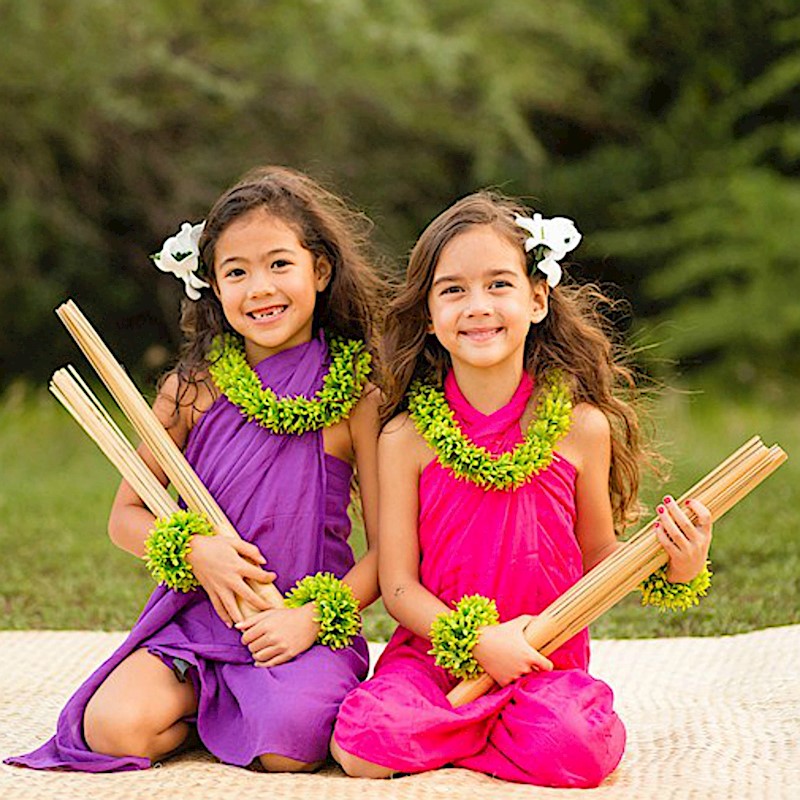
PU’ILI: split bamboo sticks, rhythmically struck together while dancing. Purchase from https://www.alohahulasupply.com/Store/Details/puili-13212.

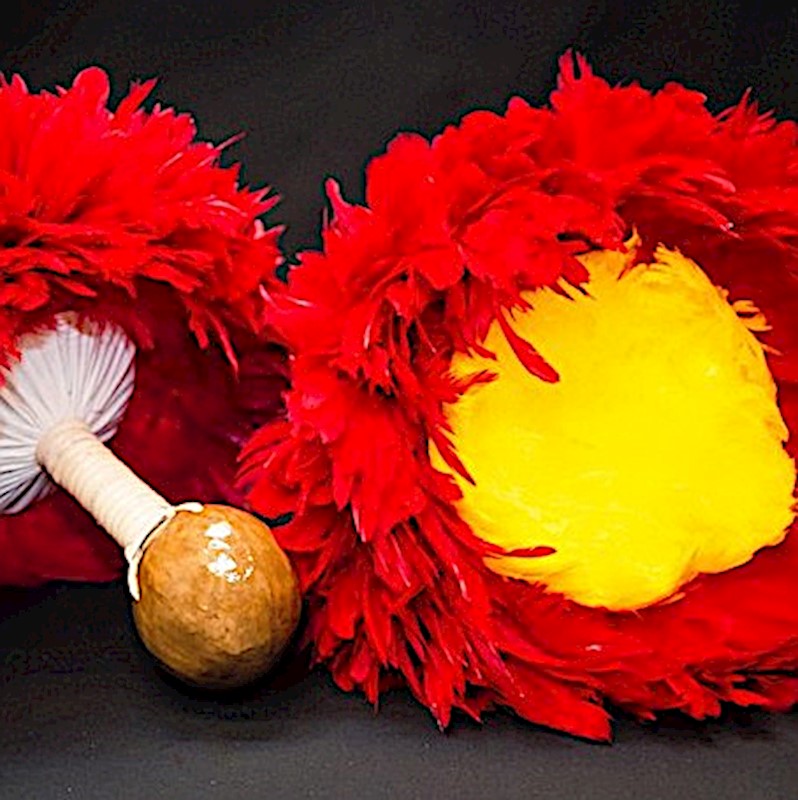
ULI’ULI:  A small, hollowed gourd filled with dry seeds to make a rattle. The ‘uli’uli are decorated with a feathered top. Purchase from: https://www.alohahulasupply.com/Store/Details/uliuli-13205.

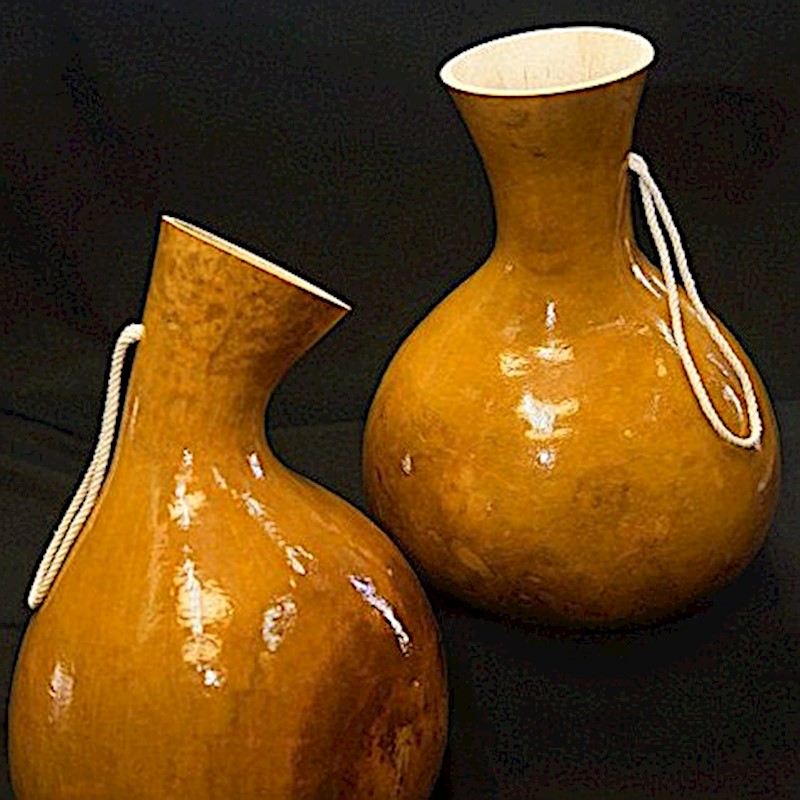
IPU: A hollow gourd used as a drum while dancing. Purchase from: https://www.alohahulasupply.com/Store/Details/ipu-gourd-13209.

KALA’AU: Tapered sticks struck together while dancing. Purchase from: https://www.alohahulasupply.com/Store/Details/kalaau-13211.

‘ILI’ILI: Four river stones held, two in each hand, and clicked together like castanets. Purchase from: https://www.alohahulasupply.com/Store/Details/iliili-13214.

Of course, reading is not always the same as seeing, so enjoy some ‘auana performances from the champion Halau O Kamuela, of O’ahu!

https://www.youtube.com/watch?v=OO2zDtzkdwg

https://www.youtube.com/watch?v=B9D-ZsF-H0w

Hawaii: Hula Part 1

O na lehua wale i ka’ana
Ke kui ae ua lawa
He le no ka wahine
O kapo
Ali’i nui o ia moku kieki e
Ha’aha’a ka la o ka ike e ike ai
He ike kumu
He ike lono
He like pu’awa hiwa ka ike akua e
E lono

There’s so much to be said about hula, and I am definitely not the most qualified to do it. I’ve studied it for several years, through two different kumu, teachers, but am not a kumu myself, or even close to being one. But pretty much everybody who visits Hawaii expects to see a hula performance. The dance has been parodied left, right, and sideways; it even made a cameo in Disney’s The Lion King (although Timon’s performance looks closer to a Tahitian ‘otea to me and, interestingly, when the musical came to Honolulu they changed Timon’s line to “do the Charleston”. Hmm). To me, it’s an absolute shame that such an ancient dance has been reduced in the public consciousness to grass skirts and coconut bras, so I would like to rectify this. The oli, chant, linked above is a traditional invocation given before learning or performing hula and is one of many. I hope it brings the proper spirit to this discussion and raises real interest for an art form I truly love.

Hula has been danced for centuries — possibly millennia. It has always been a way to tell stories and keep histories; combined with the oli, the chants, the dances are Hawaii’s oral and visual record of natural phenomena as well as the genealogies and exploits of royalty (ali’i) and gods. In the beginning, it was only performed by men. Hula had, and still has, a sacred nature, and in the earliest days a mistake while dancing could literally be fatal. Modern hula, thankfully, does not have dancers risking their lives while performing, but it still tells these ancient stories and commands reverence. Every aspect of the hula I’m speaking about today, hula kahiko, is considered. The colors worn must match the dance. The plants and flowers chosen should have been gathered from the right location, with the right chants of thanks; they should be live and never artificial. Even the p’au, the dance skirt, has protocol about how it is stored and put on. Dancing hula should completely unify mind, heart, and body. A dancer needs to prepare so she can think and feel the meaning of every motion and the story told in the song she dances to.

For more detailed information about protocol for hula kahiko, please review Kumu Vance’s website here: https://maolihulastudio.com/etiquette/.

There are two types of hula, hula kahiko and hula ‘auana. Kahiko is ancient; the chants and dances have been passed down for centuries. Visitors can recognize hula kahiko by the music accompanying the dance; the only instruments are the human voice, percussion, and occasionally a nose flute. No ukuleles, no piano. Just voice and drum. Kahiko dancers are less likely to smile and in many instances the dance movements are a little sharper. Kahiko dances tell stories of wars, gods, and great kings; a serious, thoughtful expression is often more appropriate than a smile. Kahiko dancers are also less likely to wear flowers as ornaments; green plants like ti leaves or maile are more common. There are no grass skirts or coconut bras (a dance demonstrator once explained that “in Hawaii, grass only gets about three inches long. If we wore grass skirts, hula would be R-rated”). Skirts made from ti leaves or tapa cloth are seen, however. The ti leaf clothing may be partially responsible for the misconception about grass skirts, as it is a skirt made from something green.

I love hula kahiko. The moment I hear the ipu (gourd drum) start thundering, I’m ready to move. It wakes me up completely. Sadly for me, I have more talent for hula auana, but that doesn’t mean I can’t enjoy dancing the story of King Kamehameha’s magical spear that eats people or how Pele traveled from place to place, digging holes, until she finally settled on the Big Island for her home (a myth explaining Hawaii’s many craters and, of course, the active volcano). Hula kahiko is powerful and beautiful to see. It was once forbidden by the West, so every dance performed is now also a celebration of a culture surviving oppression. But instead of going on and on telling you, why not follow good writing advice and show you?

Formal kahiko performances have four parts: An entrance dance, an oli, the main dance, and an exit dance. The video I’m linking below starts at the oli. The main dance is about a magical, giant lizard, a mo’o, who shapeshifts into a beautiful woman (and back again). Watch Natasha Oda as she transforms between the characters, and witness the beauty and power of hula kahiko.

Oahu, North Shore: Polynesian Cultural Center

“Coconuts are ripe when they turn brown,” our Samoan instructor explained, then glanced at his mostly-white audience. “Some of you aren’t ripe yet.”

A wave of giggles followed, and the teacher kept the laughter going–scaling a palm tree, sharing some coconut water with a disgusted little boy, and cracking joke after joke to keep interest in his presentation. It worked, and he seemed to love hamming it up. Afterward, visitors were invited to try to build a fire the traditional way by twirling a stick into another hollowed twig. Some people were good at this and would have probably survived in ancient Samoa. I had a resident’s annual pass for two years running and never even got a spark.

The Polynesian Cultural Center, run by Brigham Young University’s Hawaii campus, is primarily staffed by Polynesian students representing their various countries of origin: Hawaii, Samoa, Tonga, Fiji, New Zealand, and Tahiti. Visitors circumnavigate a lagoon to visit villages representing the traditional culture of each nation, and are given the chance to learn hula, Tahitian ‘otea, Tongan drumming, and how to spin poi balls (I am not good at this either). Each nation village also includes a show and presentation, and many also have traditional games available to play. In New Zealand, for example, guests are welcomed into a convincing replica of a wharenui, a beautiful communal house and welcome hall, where dancers greet them with a pōwhiri, a welcome ceremony. The courtyard outside has poi balls to play with, and also sticks for the Stick Game (I am good at this. Stick Game: https://www.youtube.com/watch?v=i-T-94dvLrU). I have heard boring people complain that the PCC is cheesy, and maybe that’s true, but the goofy humor presented to the guests accurately represents many of my Polynesian friends. They love to have fun! The Cultural Center, like Polynesia in general, is not a place to visit if someone has an oversized ego. The islands don’t have room for difficult personalities.

I highly recommend all the dance performances, including those in the villages, on the floating parade in the lagoon, and the Ha: Breath of Life show (more on that later). I don’t especially recommend the luaus. The performances are wonderful, but the food has been “meh”. The Samoan luau had the best food, especially because it offered panipopo (sweet coconut bread) for dessert, but I’m still not sure that the quality justified the cost. Keep in mind, however, that I haven’t visited the PCC for several years, and it just barely completed a major revamp of the shopping center before I moved, including adding other restaurants. Luau menus may have been revamped too, so take this review with a grain of salt and see if current guests agree with me. The luaus are still pretty pricy regardless, and they do not serve alcohol, so that alone might be a deal-breaker for some. There are other food options now, however, so the luau is not a necessity, and with the extra time I recommend seeing the immersive film offered in the Hukilau Theater. It’s a gorgeous flyover of the islands, allowing visitors to see many places that are inaccessible by vehicle or foot, and I’m not ashamed to admit that when I watched it, just before moving away, it left me in tears. It broke my heart to know that I had to leave this beautiful place I loved so deeply. Hopefully it doesn’t have this effect on every guest, but even if it does…still worth it. You’d never be able to see most of these locations without being able to hire a private helicopter.

Now, about Ha: See it.  Be aware that there is a spiritual element to the show; it refers to a higher power and spiritual power within individuals. If you don’t like this? I’d honestly put up with it if at all possible. Being turned away by beliefs you don’t share will either prevent you from seeing a wonderful show or mar your enjoyment of a really good dance show. Seriously, it is one of the best, if not the best, dance shows in all of Hawaii. The outdoor stage allows for feats that simply cannot be performed in other locations, and the fire-knife finale never fails to raise gasps from the audience. The performances are legitimately amazing and deciding to skip Ha will be doing yourself a disservice. I think I’ve gone to see it six times, now? I’m not tired of it and honestly will probably order the DVD.

Oahu: Southeast Shore, Sandy Beach

As stated in my previous post, I was told by a local Hawaiian* to never “go swim Sandy Beach.” I heeded this advice; I never went. The beach’s nickname is “Breakneck” and it isn’t a joke; the shoreline dropoff is incredibly sudden and steep. People who get caught in waves right at this spot end up killed or literally paralyzed from broken necks. You may see some surfers here, and the beach park is a nice place for a picnic, but Oahu has so many wonderful beaches I can’t recommend this one for swimming or snorkeling. I would even avoid wading because the structure of the beach exacerbates rip currents and other dangers. To me, it just doesn’t seem worth it. If you want to swim, choose another beach.

*Cultural Lesson: a “local” is someone who has lived in Hawaii, born and raised. “kama’aina” can be used to refer to someone currently living in Hawaii, but not for long enough to count as “local”. People who live in the state are never referred to as “Hawaiian”; “Hawaiian” is taken to mean kanaka maoli, a Native Hawaiian. Don’t call a local “Hawaiian” if you don’t know whether they are indigenous or not; it will help you avoid annoying the innocent.

Oahu: Southeast Shore, Makapu’u Lighthouse

Alongside the normal Hawaii trail hazards (falling rocks, cliff edges), Makapu’u Point possesses a few unusual extras, such as biting ladybugs and cactus no one wants to trip into. Yes, cactus. The islands are made of many microclimates and the most eastern spot on Oahu just happens to be windy, sundrenched, and bone-dry. You won’t find any saguaros, but even a small cactus won’t be pleasant to fall into. The “ladybugs” are actually Asian beetles. I thought I was going insane the first time I let a cute little white ladybug land on my hand, and then felt a sharp pain in my skin. But then it happened again, and only a minute after that, I heard my hiking companion: “Aw, a ladybug, how cute!”.

Me: No, wait-!
Her: OW!

So the bites were confirmed. Later I had to Google “white biting ladybug” and apparently, these beetles made it to Hawaii from Japan, and yes, they definitely bite.

Despite angry bugs and cacti, however, Makapu’u is a fun hike. Steep, and there is no shade, but the trail is maintained well and mostly level, so not all that dangerous as long as visitors remember the ever-important sunscreen and water. And the antique, red-roofed lighthouse at the end of the trail is picture-perfect. Because the trail overlooks rocky outcrops and reefs, it’s a good place to watch the ocean and listen to thundering waves. Local friends tell me that the base of the Makapu’u cliffs has some really good tide pools too, but I’ve never been brave enough to venture down and I would not recommend it to anyone who hasn’t grown up in the water. The currents along this shore are immense, and rogue waves happen more often than you might expect. In the three years I lived here, a couple people drowned in this area and they were kama’aina, locals; they knew the water. Tourists would be tempting fate. (Note: the nearby Sandy Beach is also very much not recommended for water sports. My second week on the island, I was driven to this hike by church leaders, and as we passed the beach, one of the Hawaiian men pointed out the window. “You know dis, Sandy Beach? No? We also call it Breakneck. You nevah go swim here”).

Makapu’u’s close proximity to Sandy Beach as well as the Halona Blowhole means that it gets crowded quickly. Be prepared to park at a distance and walk up to the actual trailhead, and definitely bring a camera. It’s a sweaty hike, but the breeze at the top of the ridge and the view of the island, the lighthouse, and the ocean is as good as anyone could ask for. On clear days, Maui and Lanai are visible as blue shadows on the horizon, and I’ve been told that in the winter this trail is great for seeing humpback whales. I’ve never been lucky enough to see more than a spout of mist from a blowhole, but visitors who come from December-April might want to consider bringing binoculars or a camera with excellent zoom capability, just in case.

Oahu East Shore: Lanikai Pillbox Hike

The waters around Kailua were sparkling invitingly below the trail, but I didn’t care. I couldn’t even see. With the mud sucking at my ankles, I might as well have been on the moon for how much good the ocean was going to do me. My eyes were firmly fixed on the trail that seemed determined to toss me off the ridge the second I took a wrong step, and my thoughts were as follows: Am I going to have to crawl? I really don’t want to put my hands down; who knows what could be living in this mud! We’re a tropical climate, we have microbes and centipedes and probably leeches and when I get to the top of this ridge I’ll want to wash my hands and obviously there’s not a bathroom past this hill, holy crap this is so steep. I’m going to die. 

The Lanikai hike is always steep, but the mud was new. We’d started later in the day than I was used to, which left ample time for the daily rain to happen before we even reached the parking lot. I’ve never been great with inclines and had puffed my way up the trailhead even in perfect conditions; the introduction of mud turned the hike into a new kind of torture. I was debating turning back (but how will I get down this slope without breaking my neck?) when a cheery voice broke through my concentration. “You talk to your Heavenly Father!”

The speaker was a short, round, smiling Chinese lady, who had wisely brought hiking poles, looked to be about seventy years old, and wasn’t even slightly out of breath. I also had never seen her before in my life. This didn’t seem to bother her, because the moment I looked up she grinned. “You ask God. He’ll get you up the mountain!”

“Good…idea,” I wheezed, and doubled my efforts to ascend another two feet while the Chinese Superwoman bounced up the hill like a freakin’ springbok. God, and/or a stubborn desire to not be bested by a trail that was clearly no problem for a woman at least fifty years my senior, eventually did get me up the mountain, although I had no energy left to haul myself onto the cement pillboxes.

The Lanikai hike is not usually so bad, although the trail starts immediately with an (incredibly) steep incline guiding visitors up to the ridge. After rain, it turns nightmarish, but on pleasant days the view from the top is worth the effort. The crumbling pillboxes, leftover bunker lookouts from the Second World War, offer perfect eyries for Instagram photos or a post-hike picnic. The boxes are tall, with no easy way to climb, but people with some arm muscle are able to pull themselves up and over. Soldiers from generations ago used them to watch for incoming airplanes or submarines; today’s visitors simply enjoy the sight of the Pacific stretching out thousands of miles to California.

Surprisingly inoffensive graffiti covers the pillboxes and honestly makes them more photogenic, but it goes without saying that just because someone else has tagged the bunkers does not mean you should. Everywhere you travel should be left better than when you arrived, but Hawaii is ecologically and culturally a very sensitive place. Trash left on the trail could kill off a species found nowhere else on the planet; graffiti over what already exists could be silencing locals who are only just emerging from an environment of constantly being silenced. Respect the trail. Bring plenty of water and a walking stick or hiking poles if at all possible – it isn’t a loop, so you do have to go back down the hill of doom, which is more treacherous than going up. And take your time! Not only is a slower pace safer, ostensibly you are on the hike to enjoy the view, so you might as well do exactly that.

Oahu North Shore: Kahuku Grill & Seven Brothers

Does Opal Thai sound too fancy for you? Need a more casual, quick bite? Kahuku Grill might fit. It’s several miles outside of Haleiwa, and a tiny pitstop on the side of the road. It offers perfectly good burgers and fries, but the number one item on the menu is the coconut-macadamia crusted shrimp complete with side salad (lettuce or macaroni), furikake rice, and a Thai sweet chili dipping sauce. Shrimp trucks dot the entirety of the North Shore, with many of them serving up delicious options, but even the mouthwatering garlic shrimp does not compare to the coconut-mac. The chili sauce completes the flavor trifecta and the whole meal combined is a refreshing plate lunch after a day at the beach.

Keep in mind that, like most places on the North Shore, the restaurant is small and often busy. The service has always been perfectly friendly, but lines are common and many times the only place left to eat is at one of the tables outside. Most of the year the balmy tradewinds so common on Oahu prevent this from being a problem, but when the winds die or during heavy rain, outdoor eating can be unpleasant.

If you would like to stay in Haleiwa, Kahuka Grill has a sister restaurant in town called Seven Brothers that focuses on burgers and fries. The Paniolo (cowboy) burger remains my favorite, with the combination of barbecue sauce, onion rings, pineapple, and grade-A beef making for a truly delicious (and messy) experience. Seven Brothers’ rosemary potato slices are rightfully famous and not to be missed. Either restaurant is a great option for a day on the North Shore, and if time allows, it’s probably worth visiting both.

7brothers paniolo
http://www.sevenbrothers.com. Since I left Hawaii, Seven Brothers opened several locations in Utah, so visitors to that state may be able to get a taste!

Oahu: Central Valleys; Byodo-In Temple

Konnnggg. 

The log swung back from the bronze bell, into my hands, and I pushed it forward again to send another echo up to the mountains. The sound of the bell brings good fortune and blessings, so visitors are encouraged to ring it before entering the Byodo-in Buddhist temple.

Japan has a long, storied, and sometimes complicated presence in Hawaii, and arguably the crowning jewel of this presence is Byodo-In, nestled in the Valley of the Temples Memorial Park. The temple is a non-denominational replica of a centuries-old temple in Uji, Japan, and welcomes all people to visit and feel peace. The quiet temple valley houses bamboo groves, swans, native birds (who love to be fed; there are vending machines for their food), koi ponds, and gardens. On ordinary days the temple offers respite from the bustle of the busiest island, but on festival days the grounds spring to life with lanterns, floating lotus flowers, and cultural demonstrations such as Edo-period music and martial arts. The temple always gives education and rest, but those who plan ahead may also find some fun. Byodo-In’s website includes a calendar of upcoming events: https://byodo-in.com/. Culture enthusiasts will enjoy the gift shop, which sells artwork, stoneware teapots, and home goods such as chopsticks.

I always recommend a visit if possible to do so. Oahu is crowded and it can be harder to enjoy the natural surroundings compared to other islands. Tourists staying in the chaos that is Waikiki could especially use the respite, so if there is any way to block out a couple of hours for the Valley of the Temples park, you should. As an added bonus, if you post a photo of the temple on social media you’re going to get a lot of people asking when you went to Japan. How long you keep the joke going is up to you!