Summer is snorkel time on Oahu’s North Shore. Winter waves can reach 50 feet or higher, and completely wash out the highway, but starting in spring the ocean calms to the clear, warm water that Hawaii is known for. Most of the shoreline is safe for swimming during this time of year, but two places stand out for snorkeling. Three Tables (named for three flat rock formations visible in the water) and the adjacent Shark’s Cove (a rocky, shielded inlet with no sharks whatsoever) offer some of the most accessible snorkeling on the island. Both locations are rocky, which is a good thing since rocks give coral a place to grow and fish places to hide, but it does mean that water shoes are required along with sunscreen and plenty of drinking water. The shoreline has a little shade, but it isn’t great for sitting in — many of the trees drop thorns.
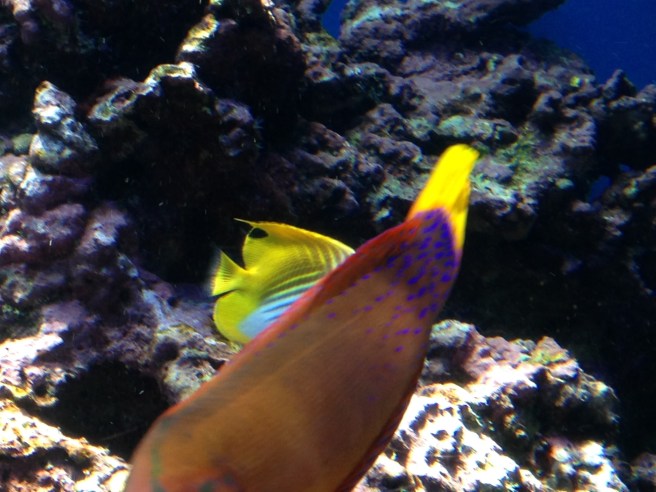
Shark’s Cove is the shallower location. It is also rockier and it can be tricky wading in and out of the inlet (wearing fins not recommended). Visitors must take care not to step on the boulders and damage the coral, but since the water is rarely deeper than waist-high it can be difficult to keep balance. I learned the hard way after tripping and accidentally kicking my pregnant sister in the head; please, be cautious wading in! Still, the cove is nearly cut off from the sea by large boulders, so it also tends to be more sheltered and forgiving to unconfident swimmers. The northern side of the cove drops sharply and becomes significantly deeper; it also contains the only passage to the sea. More skilled snorkelers and divers often swim this to investigate the reef outside of the cove, but this is not recommended for beginners. The waves funneling through the narrow lava passage are amplified and rip currents are always a risk, so most visitors are better off keeping to the southern half of the cove. Even without chancing the open ocean, however, Shark’s Cove still has plenty to see – octopus, eels, butterfly fish, unicorn fish, tangs, and of course, the famous humuhumunukunukuapua’a, the state fish of Hawaii.
At Three Tables, you will likely share the sea with divers. Three Tables still has shallow areas, but there are frequent, dramatic drop-offs, and most of the beach goes deeper than 10 feet. I float easily, so the one time I dropped my snorkel, I had to beg a complete stranger wearing fins to dive and retrieve it for me; I could not get to the seafloor, even with a friend trying to push me deeper. It might be difficult making it past the breakers to the snorkeling area wearing fins, but for the brave, it could be worth the effort. Three Tables often sees large schools of fish stopping through, and Hawaiian green turtles, honu, are common.
Be wary of tides at both locations and observe the water and other swimmers before going in. Three Tables and Shark’s Cove are frequently glass-smooth, but waves crunched me at both beaches when I was too impatient about getting in. Also be aware that Hawaii’s unicorn is North Shore beach parking – be patient looking for spaces and be gracious about sharing the road. Watch for pedestrians. With the proper precautions, you’ll be able to enjoy a wonderful day in the water.


 wanderingsheepdog